


The dilemma between repair or replace becomes inevitable for all homeowners sooner or later. Once your freezer or dryer breaks down, you will have to make a split-second decision, and that’s precisely why it is always recommended to know the numbers in advance. By 2026, the growing cost of spare parts and the emergence of advanced yet more expensive machines have made the situation more challenging than ever. Moreover, the price of labor has risen across the country, narrowing the gap even further.
Reasons for Appliance Malfunctions
Knowing what goes wrong with appliances can help with the decision of repair or replace. Some reasons are:
* Worn components: Components such as motors, compressors, and belts wear out after 8 to 15 years of use.
* Power surges: Surges are very frequent in Florida due to storms and power outages that burn out control boards.
* Overloading: Too many clothes inside washers or dryers overburden motors and bearings.
* Poor maintenance: Blockage of vents in a dryer and grime on coils cause appliances to malfunction.
* Hard water or mineral buildup: Damages the washer’s pump and valve system.
Furthermore, appliances installed in garages or outdoor laundry rooms tend to fail faster, since temperature swings and humidity accelerate rust and corrosion on internal parts.
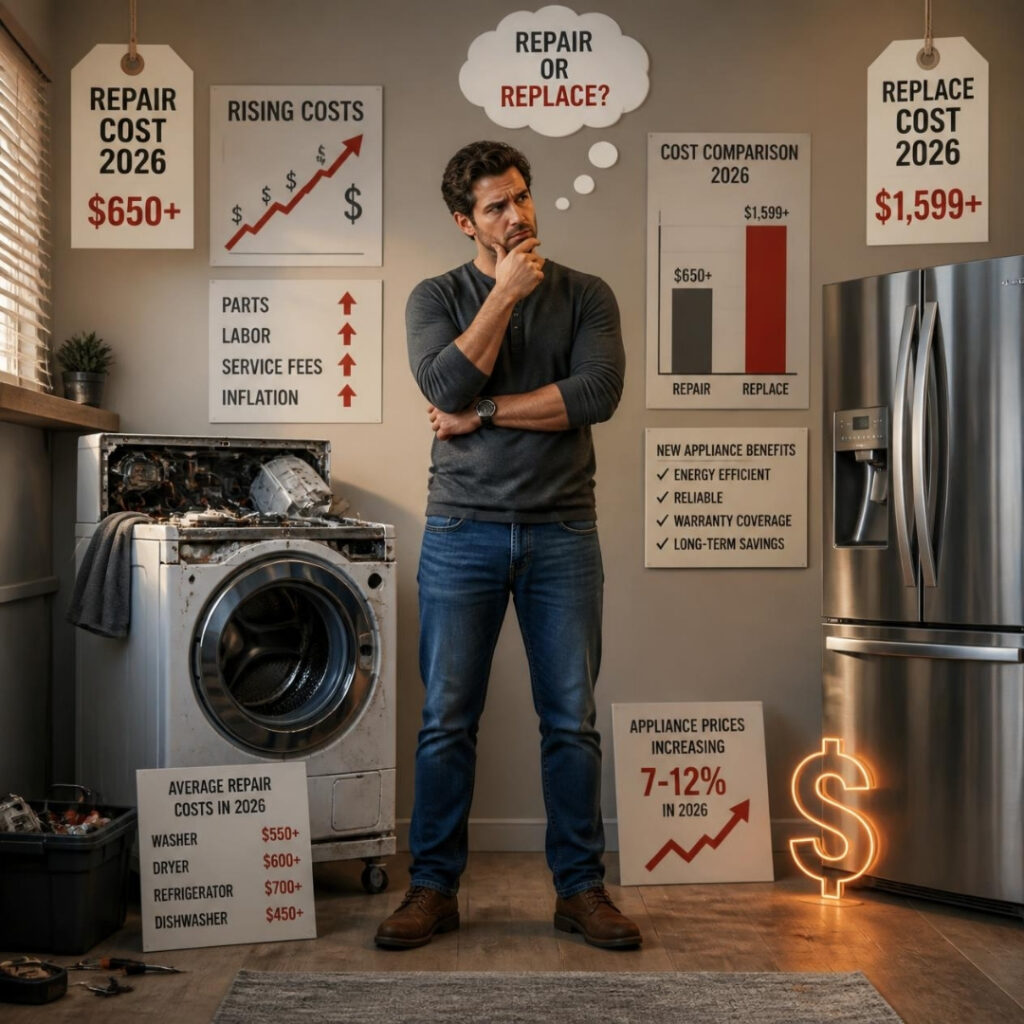
The Cost Comparison between Repair or Replace:
Consequently, the table below compares average 2026 repair costs against new-unit pricing:
| Appliance | Avg. Repair Cost | Avg. Replacement Cost | Repair Worth It If… |
| Refrigerator | $200–$450 | $1,000–$2,500 | Under 8 years old |
| Washer | $150–$350 | $600–$1,400 | Under 7 years old |
| Dryer | $100–$300 | $500–$1,200 | Under 8 years old |
Generally, if a repair costs less than 50% of a replacement, fixing it is the smarter move. However, if your appliance is older and already showing multiple symptoms, replacement often saves money long-term. Meanwhile, energy-efficient 2026 models can also lower monthly utility bills enough to offset part of the upfront replacement cost within a few years.
Safety Checks Before You Make the Repair or Replace Decision:
Here are some things to check before attempting to make your decision:
1. Disconnect appliances like refrigerators or dryers before checking them out.
2. Check for gas leaks in case you have a gas dryer or range; if there’s a rotten egg smell, immediately stop and call in an expert.
3. Look for any signs of scorched plugs or outlets, as these indicate electrical problems.
4. Keep the vent of the dryer clean, as this is one of the most frequent causes of household accidents.
5. Don’t do any repairs by yourself in case of sealed refrigeration systems; only certified persons can deal with the refrigerants.
In addition, always keep a fire extinguisher rated for electrical fires near your laundry room, since dryer-related fires remain one of the leading causes of home appliance incidents.
Repair or Replace: The Bottom Line
Ultimately, the repair or replace decision comes down to age, repair cost, and how many prior issues the appliance has had. If you’re unsure which option makes sense for your fridge, washer, or dryer, OJ Same Day Appliance Repairs offers same-day diagnostics in Fort Lauderdale, so you get an honest, no-guesswork answer before spending a dime.
Frequently asked questions
Not usually. Once a fridge passes eight years, repair costs often approach 50% of a new unit’s price, making replacement the better long-term value.
Typically $150–$300, depending on whether the issue is the belt, motor, or control board
If the dryer is under six years old, repair is usually cheaper. Older units with heating element failures often signal broader wear.
Most refrigerators last 10–15 years, though usage and maintenance affect that range significantly.
Repair is usually cheaper if the leak comes from a hose or seal, since those parts cost far less than a new washer. However, if the leak stems from a cracked tub, replacement is typically the better long-term investment.
